

How we stay wild.
Growing into the shape of our longing.

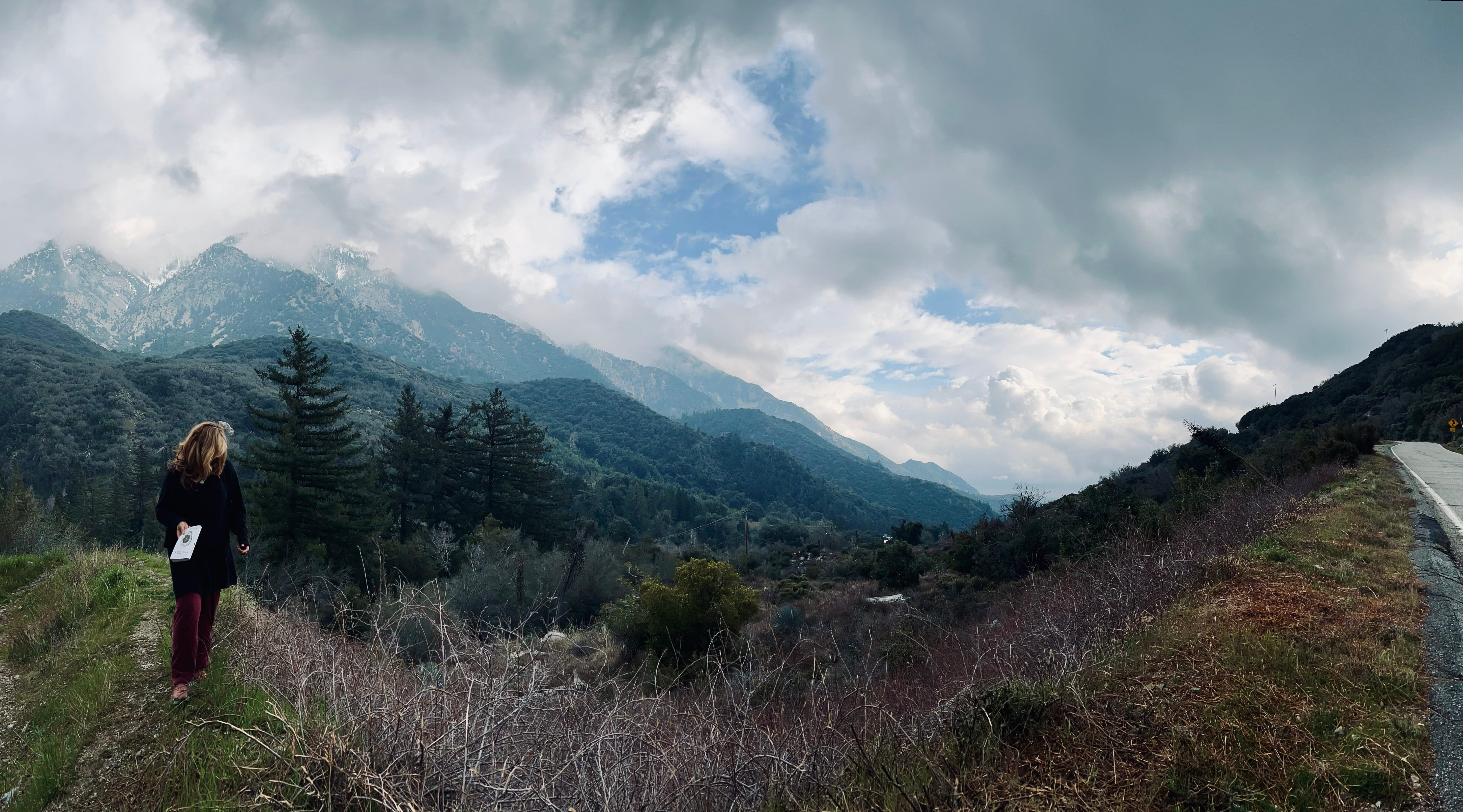
For much of my life, the qualities that made me feel most alive were also the ones other people tried hardest to correct.
I’ve been called wild, feral, bohemian, witchy, earthy, hippie, delusional, and other things I’d rather not name. Some of these words have been offered with affection. Others were meant to shame.
What they all circle, I think, is my allegiance to the living world.
I believe we belong to the living world the way a tree belongs: rooted in a particular place, responsive to weather and darkness, dependent upon conditions it did not create, entangled with plants, animals, fungi, water, and light.
Trees need specific conditions and connections to thrive.
So do we.
You could also call me an animist, which means I understand the world as alive in its own right. Belonging within nature is not an abstraction. It’s a network of attention, obligation, dependence, and exchange, and I believe humans live better when we participate in that network rather than preside over it.
In other words, the living world isn’t the backdrop to my real life. It is my real life.
For most of my life, I lived in my head, not my body. My mind composed elaborate explanations for why I should remain in places where my body tightened, disappeared, or went numb. I mistook my ability to endure something for evidence that I should.
Staying wild means I no longer stay in cages. It means I remain in conversation with my animal body and listen to what it tells me.
I stay wild when I trust my body to speak in a language older than domestication. I notice what makes me expand and what requires me to diminish. I choose relationships with humans and with the more-than-human world that allow me to grow into the shape of my longing.
Wildness is not the absence of human relationship, but the ability to remain fully alive inside one.
And curiosity is part of this. Relationships are more alive when they aren’t based on containment or extraction, when we encounter another life without immediately calculating what it can offer us.
What is here?
What does it need?
How might I belong here without taking over?
Art requires these same conditions.
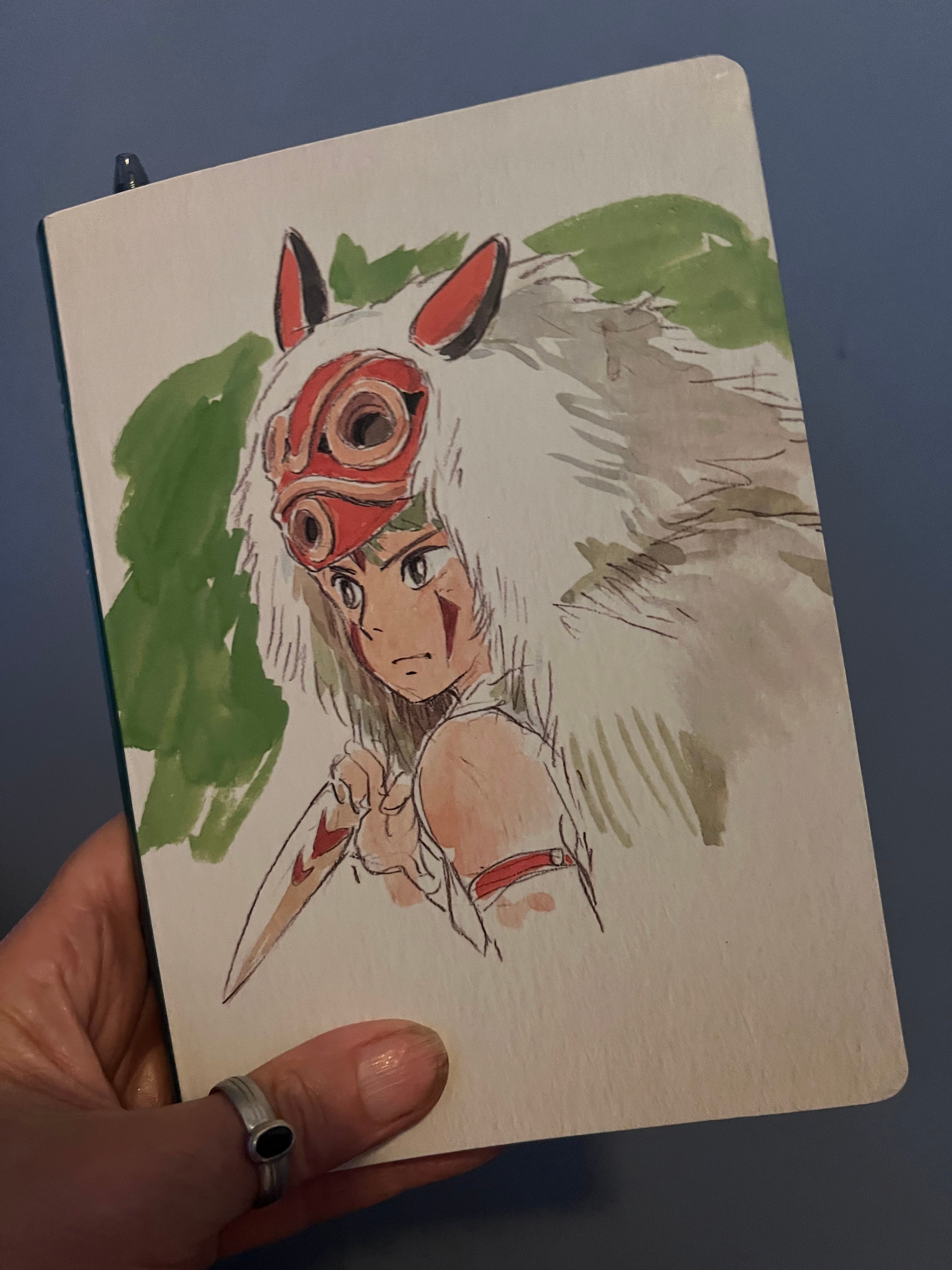
I bought this blank book in a little independent bookstore called Paper and Clay. Across its pages are drawings of San, the untamed young woman at the center of Princess Mononoke. San has every reason to become consumed by hatred. Her history would justify it. Instead, her story turns on a feral, feminine, embodied question:
Can you protect what you love without becoming what wounded you?
To make art, I protect my attention, remain available to wonder, follow what quickens inside me, and listen to my body as a source of wisdom and mystery.
Art happens when I pay close enough attention to an inner experience that I can give it form: through language, movement, sound, color, or shape. As artists, we translate experience into forms that move through other bodies, waking what has gone numb or giving language to what has not yet been named.
Like San, my wildness is a conduit for my art. It’s not an aesthetic I perform, but the source from which I make.
Which is also to say, I, too, am becoming impossible to domesticate.
Not impossible to love.
Just impossible to own.
The Secret Garden Series is an exploration of your chosen art practice, held within the container of community. It’s not too late to join us!
Wander in and out of this garden, as little or as much as you like.
Workshops are offered on the following Saturdays from 1:00-2:00 PT
July 25 - Art as a Daily Practice
Aug 29 - The Art of Mindfulness
Included in your annual paid subscription
Replays will be sent to paid subscribers.
Connect in community
Yoga at the Maloof – Fridays at 10 a.m. Yoga on Tap at Claremont Craft Ales – 2nd & 4th Sundays, 11:30 a.m. Crestline Hot Yoga - Tuesdays at 9:00 a.m.
Summer retreats are sold out. Registration for our Full Moon Retreat, October 22-26 is available now for paid subscribers.
If You’re New Here
I’m Michelle, a writer, teacher, and lifelong forager shaped by the mountains of California. I grew up in an apocalyptic cult, where I learned to survive from the land, distrust the world beyond it, and listen closely for what lives beneath the surface.
My memoir, Forager: Field Notes for Surviving a Family Cult, a Golden Poppy Award finalist, tells the story of how I left everyone and everything I believed in, what I carried with me, and why escape was only the beginning.
Today, my work explores how attention, creative practice, embodiment, and the living world help us become more fully alive. Through this newsletter, retreats, workshops, and an ongoing practice of yoga and dance, I invite others to join me in the wild.
